
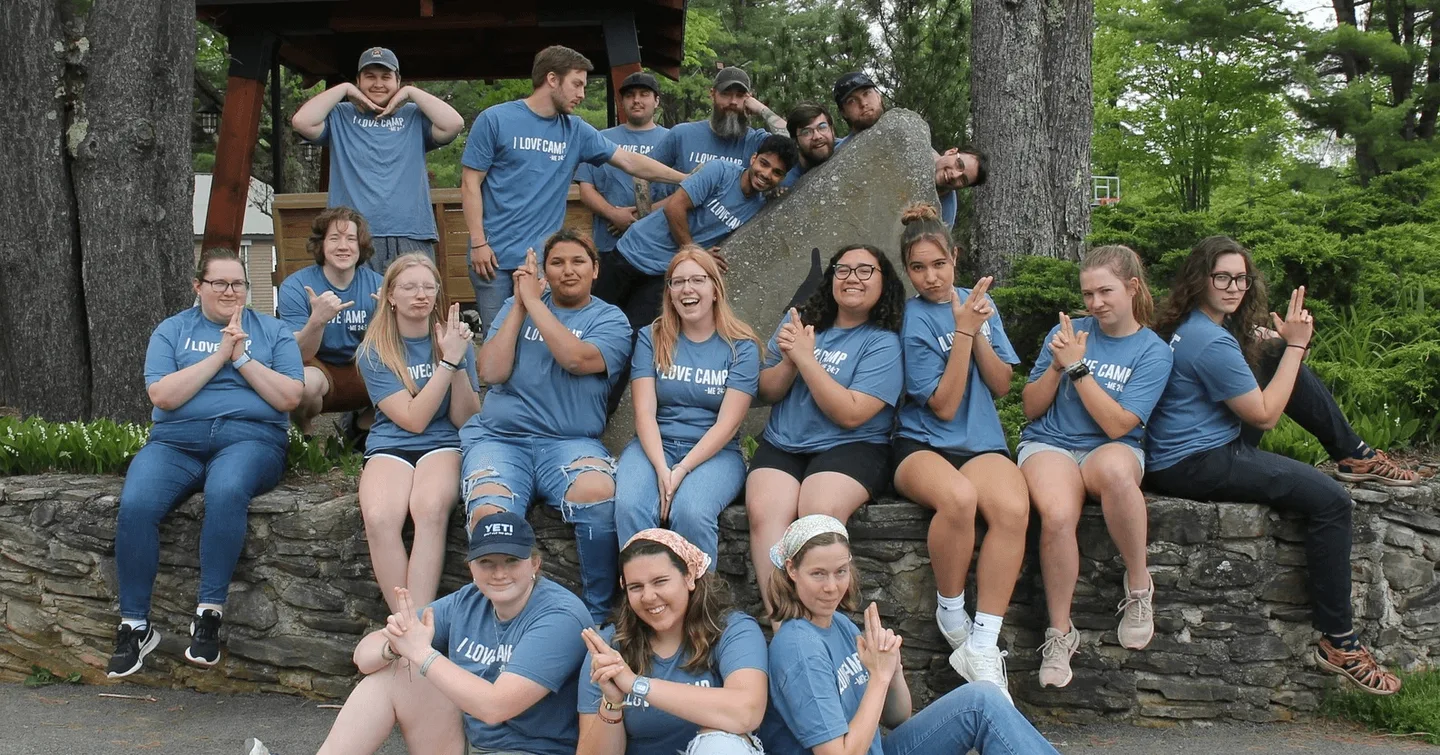
You're becoming who you are with every decision, not every life choice.
Joel Becker
Arrowhead Bible Camp
Read the Story →
Build a foundation for leading people through an online associate degree in Christian leadership. Connect biblical understanding with practical ways to improve a team’s work and learn from your ministry experience.
Develop practical capabilities for the people and places you serve.
Learn to connect an organization’s mission with the decisions and priorities that shape its work.
Develop your approach to recruiting, equipping, and supporting people as they work toward shared goals.
Strengthen your ability to evaluate challenges, develop strategies, and adapt as circumstances change.
Explore the structures and leadership practices that help people learn, contribute, and accomplish the mission.
Choose a concentration within your Associate of Science in Christian Leadership program, or pursue the program without one.
Concentration requirements count within Focus Electives (12 credits); they do not add to the degree total.
Select 4 courses from 6 eligible courses.
| Course | Credits |
|---|---|
| CAM400Learning Activities, Games and Events | 3 |
| CAM401Foundations of Camping & Outdoor Education | 3 |
| CAM405Counseling in Active Learning Environments | 3 |
| CAM407Foundations of Experience-Based Learning | 3 |
| CAM409Recreational Programming | 3 |
| CAM424Management of Support Services | 3 |
Concentration requirements count within Focus Electives (12 credits); they do not add to the degree total.
Select 4 courses from 5 eligible courses.
| Course | Credits |
|---|---|
| MIS280Applied Intercultural Ministry Practicum | 3 |
| MIS311Intercultural Ministry Philosophy | 3 |
| MIS321Intercultural Communication | 3 |
| MIS411Intercultural Evangelism | 3 |
| ANT210Introductory Cultural Anthropology | 3 |
Concentration requirements count within Focus Electives (12 credits); they do not add to the degree total.
Select 4 courses from 4 eligible courses.
| Course | Credits |
|---|---|
| YMN301Youth Ministry Philosophy | 3 |
| YMN315Adolescents & Youth Culture | 3 |
| YMN321Youth Ministry Communication | 3 |
| YMN407Youth Evangelism | 3 |
Concentration requirements count within Focus Electives (12 credits); they do not add to the degree total.
Select 4 courses from 10 eligible courses.
| Course | Credits |
|---|---|
| DSM301Foundations of Disability Services | 3 |
| DSM290Leadership in Disability Studies Internship I | 2 |
| DSM305Social Work & Disability Studies | 3 |
| DSM311Disability Practices in Children & Adults | 3 |
| DSM320Adaptive Physical Activity | 3 |
| DSM411Disability & The Church 1 | 3 |
| DSM412Disability & The Church 2 | 3 |
| DSM420Disabilities: Advocacy & Ministry Partnerships | 3 |
| DSM430Disabilities: A Global Perspective | 3 |
| DSM395Leadership in Disability Studies Internship II | 2 |
Online coursework connects with a relevant role in a church, camp, nonprofit, or other ministry setting. A volunteer or professional role can work. Admissions can help you confirm a context that fits your program.
A typical full-time undergraduate load is 6 credits per 8-week term. Taking courses in all five terms offers a pace of 30 credits per year. Partner schedules may use 8- or 16-week terms. Your completion time depends on your program, approved prior credits, and course plan.
Study Scripture, leadership theory, and relevant organizational practice.
Examine how those ideas relate to the challenges you encounter.
Create work that demonstrates what you are learning.
Explore the required courses and choices that shape your program. An advisor can help you connect these requirements with your goals and previous learning.
View official degree requirements ↗Requirements from the published 2026-27 catalog.
BIB100 · Principles of Bible Study — 3 credits
Select 1 of the following options.
THE120 · Foundations for Christian Living — 3 credits
COU209 · Spiritual Formation & Identity — 3 credits
Choose one of the following options.
BIB110 · Bible Survey — 3 credits
Select 3 credits from the eligible courses.
The published pool excludes 1 courses. See the official catalog for exclusions and advising details.
BIB111 · Old Testament Survey — 3 credits
BIB112 · New Testament Survey — 3 credits
Select 3 credits from the eligible courses.
Select 3 credits from the eligible courses.
Select 3 credits from the eligible courses.
Select 3 credits from the eligible courses.
Select 3 credits from the eligible courses.
LDR301 · Foundations of Leadership — 3 credits
MIN401 · Dynamics of Discipleship — 3 credits
MIN402 · Introduction to Impact Ministry Leadership — 3 credits
MIN403 · Principles of Ministry Strategy — 3 credits
MIN404 · Developing Dynamic Teams — 3 credits
Select 12 credits from the eligible courses.
Optionally complete one of the several concentration pathways. These credits are included in the degree total, not added to it.
The published pool excludes 5 courses. See the official catalog for exclusions and advising details.
Complete 6 credits of free electives.
You're becoming who you are with every decision, not every life choice.
Arrowhead Bible Camp
Read the Story →Explore a tuition estimate based on your expected credits and study pace. A credit review helps turn your estimate into a personal degree plan.
60 credits remaining · 2 years at this pace
Most ministry partners subsidize $100/credit or more in addition to the partner rate; not included above.
Tuition estimate only; credit approval required. See the catalog for details.
Anchor's integrated approach helps you move forward with financial freedom, demonstrated ability, and relationships that matter.
A path toward a debt-free launch. Accessible tuition, partner discounts, and additional ministry subsidies can help you prepare for ministry or further study without carrying education debt into your next chapter.
A portfolio that shows what you can do. Real projects completed throughout your degree give you concrete evidence of your competencies—work you can put on your résumé, discuss in interviews, and share with future ministry leaders.
People who can champion your next step. Learning and serving alongside organizational leaders builds a network of people who know your name, have seen your work, and can offer references, introductions, and encouragement as you move forward.
The program connects learning to a real organizational context. Talk with admissions about your current role or opportunities to establish an appropriate context.
A transfer and prior-learning review can evaluate eligible learning against program requirements. Credit is determined through that review.
Start with an admissions conversation about your goals, background, learning context, and degree plan.
Talk with admissions ↗Let's explore how this degree fits the work you're called to do.